Create team cultures that feel safe to speak up, share ideas, boost wellbeing and inspire creativity.
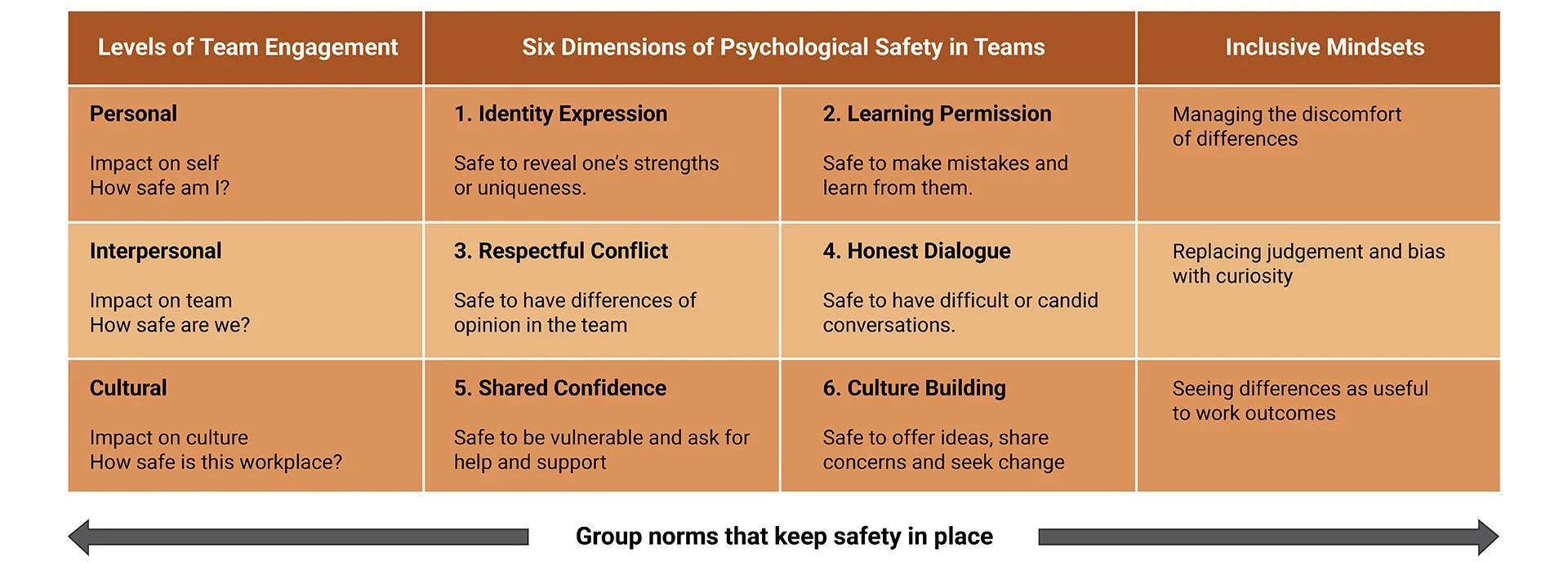
The Six Dimensions of Psychological Safety Framework
Our psycholgoical safety workshops are based on Sonali Dsilva’s Six Dimensions of Psychological Safety Framework. This provides a practical and clear approach to our psychological safety training programs. Participants will find a roadmap to strengthen team safety, raise inclusion and deepen trust. Our workshops address a safe, inclusive and respectful work culture at each level of team engagement — Personal, Interpersonal and Cultural. Participants will learn everyday behaviours that raise interpersonal safety and boost inclusive communication and wellbeing. When teams feel safer, more people speak up, develop confidence and become high-performing at work.
Psychological Safety Workshops
For Leaders
Creating Psychological Safety in Teams
Workshop for team leaders and managers (Full day/Half-day)
Purpose: Equip team leaders and managers with the mindset, behaviours and practical tools required to build a safer team culture and raise respect, wellbeing and trust.
Target Audience: Team leaders, managers, emerging and new leaders, HR, DEI and OD professionals.
Objectives
Gain a practical understanding of psychological safety
Discover an actionable framework to accelerate safety
Practice the six dimensions of safety that lift team culture
Learn strategies to help people speak up and contribute
Find ways to convey psychological safety to one’s team
The Psychological Safety Blueprint
Short Masterclass for Executive & Senior leaders (1.5 - 2 hrs)
Purpose: Provide strategic insight to senior leaders to strengthen a safer work culture, unlock team contribution and engagement and promote high-performance.
Target Audience: Executive and Senior leaders, Directors, Department or Function Heads, Board Directors.
Objectives
Understand the hidden barriers to team safety
Learn tools to encourage participation and diverse input
Build confidence in responding to challenges and feedback
Strengthen communication that supports openness
Encourage a culture of safety, respect and belonging
For Teams
Building a Culture of Team Safety
Workshop for employees, staff and teams (half-day)
Purpose: To help employees across different teams and functions to understand psychological safety and develop interpersonal safety and trust in everyday interactions.
Target Audience: Employees, staff and team members across all levels of the organisation
Objectives
Understand what psychological safety means at work
Recognise what builds or weakens team safety
Strengthen behaviours that support inclusion and trust
Maintain respect during pressure and disagreements
Develop stronger communication and team collaboration
Psychological Safety Essentials
Short Course for employees, staff and teams (1.5 to 2 hrs)
Purpose: To help teams learn practical psychological safety techniques and tools that improve candour, respect and trust and raise interpersonal confidence at work.
Target Audience: Employees, staff and team members across all levels of the organisation
Objectives
Discover how psychological safety affects team culture
Learn ways to have honest and respectful conversations
Discover how to receive and offer constructive feedback
Replace hesitation with interpersonal trust and confidence
Build positive relationships through respect and inclusion
Why Psychological Safety Matters at Work
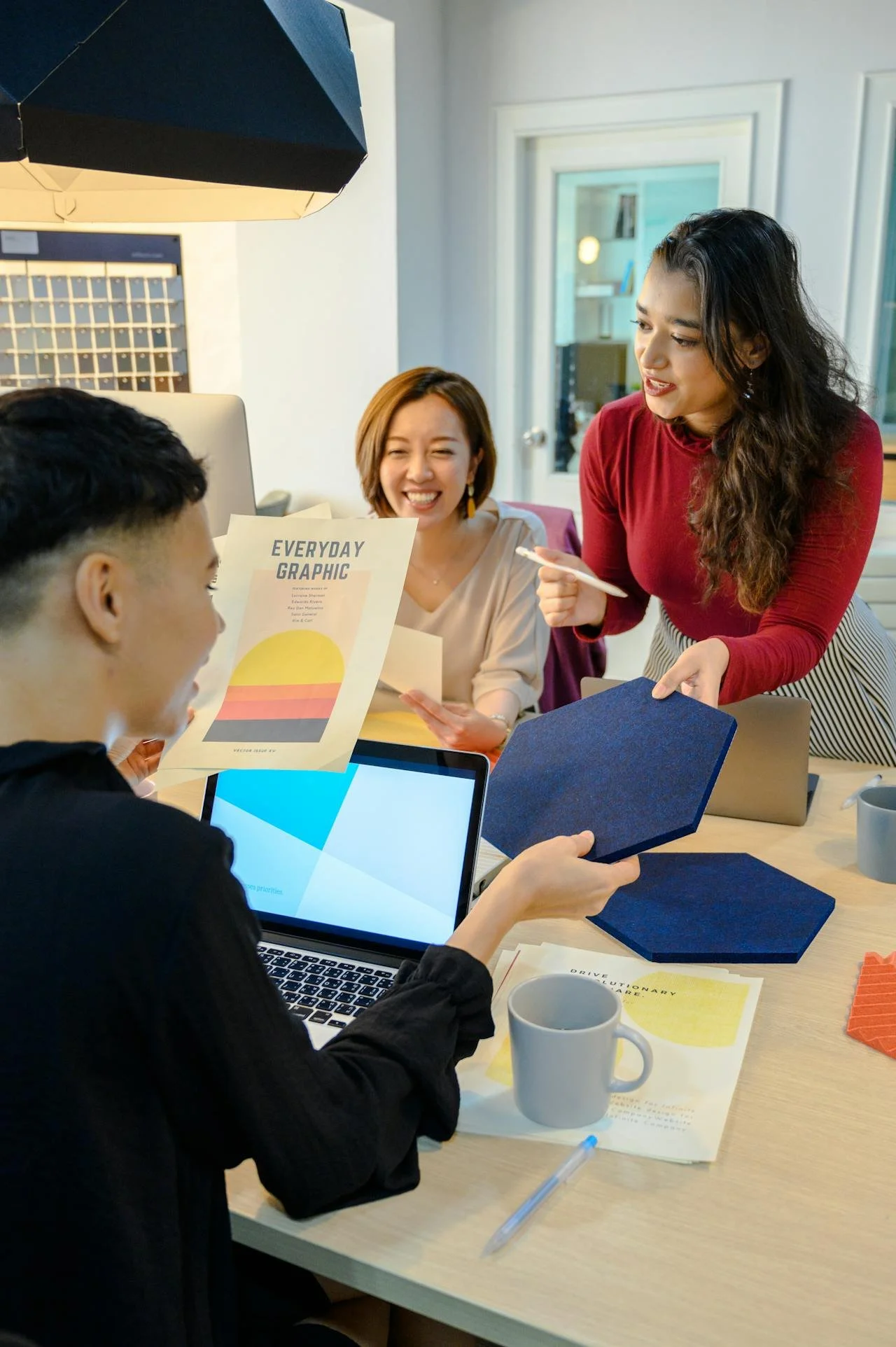
Research tells us that Psychological safety is the foundation of high-performing teams. When people feel safe to contribute, ask questions and learn from mistakes, collaboration and communication become easier, and team outcomes improve.
In unsafe teams, people hold back—not because they lack ideas or motivation—but because they worry about social risks. This creates loss of wellbeing and productivity and lowers people’s initiative and creativity at work.
Our Psychological Safety workshops for leaders and teams enable a safer work environment where people feel supported to learn, grow and bring their best talents to work.
Consider More of Our Workshops